
How to Choose Quality D-Aspartic Acid: What to Look for on the Label
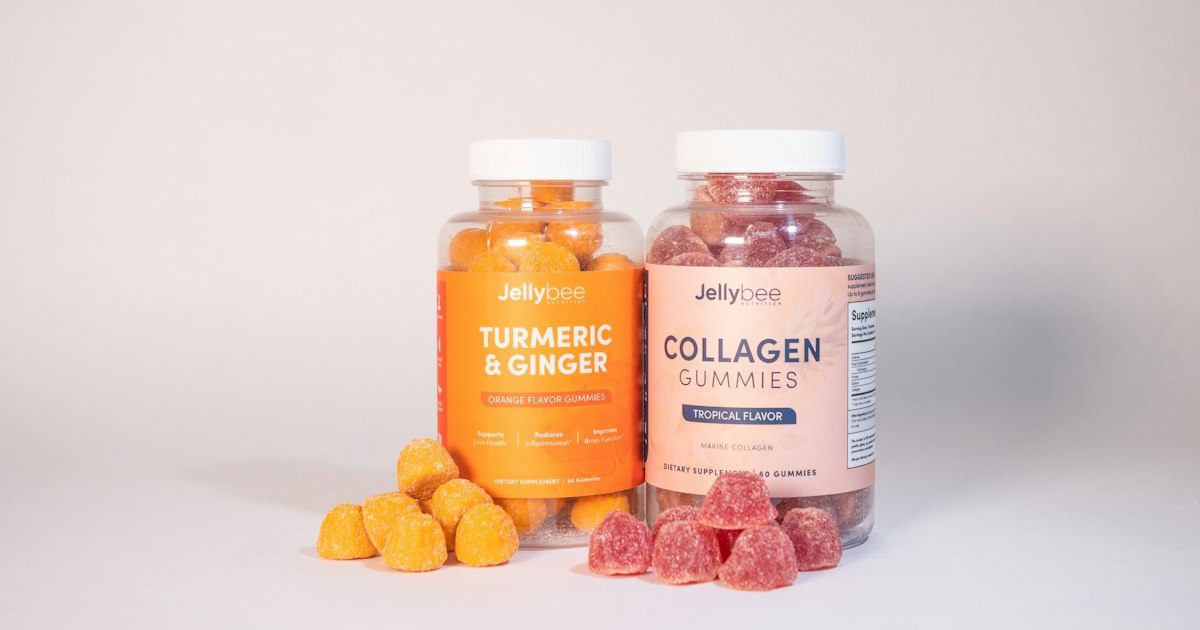
D-aspartic acid (DAA) is a supplement simple in composition, but for that very reason it is easy to miss details on the label that determine what you are actually buying. The 'D' prefix, the salt form, the amount per serving, the isomer purity - all of this affects how well the product matches the doses studied in research. The editorial team explains how to read a DAA label.
D, L, or DL: Why the Prefix Is Critically Important
Aspartic acid exists in two mirror-image forms - L and D. L-aspartic acid is an ordinary proteinogenic amino acid that is part of proteins and comes in sufficient amounts from food. D-aspartic acid is the other isomer, credited with a neuroendocrine role and the focus of all testosterone-booster advertising (D'Aniello, 2007).
Biologically, these forms are not interchangeable. The studies that became the basis for the supplement's popularity used the D-form specifically (Topo et al., 2009). L-aspartic acid is much cheaper, and if the label simply says 'aspartic acid' or 'L-Aspartic Acid,' it is not the right product.
Another option is DL-aspartic acid, that is, a racemic mixture in which the D-form makes up only about half. Such a product provides half as much D-isomer for the same mass.
So the first line worth checking is the exact chemical name: 'D-Aspartic Acid,' 'D-aspartic acid,' or 'sodium/calcium D-aspartate.' The abbreviation DAA on the front panel is just marketing; what matters is what is written in the composition.
Free Acid or Salt: Recalculating the Dose
DAA is sold in several forms: as the free acid, as the sodium salt (sodium D-aspartate), and as chelate compounds with calcium or magnesium. The form determines how much actual D-aspartic acid is contained in one gram of powder.
In the study by Topo et al. (2009), participants received 3.12 g of sodium D-aspartate per day. Since part of the salt's mass is sodium (and in hydrated forms also water), the amount of actual D-aspartic acid in such a dose is less than 3 g. Subsequent studies in athletes used 3 or 6 g of DAA per day (Willoughby, Leutholtz, 2013; Melville et al., 2015).
| Form on the label | Features | What to pay attention to |
|---|---|---|
| D-Aspartic Acid (free acid) | Highest share of active substance per gram | Sour taste, dissolves poorly in water |
| Sodium D-Aspartate | Form from the first clinical study, highly soluble | Contains sodium; recalculate the dose to the acid |
| D-Aspartate Calcium Chelate / Magnesium | Positioned as an 'improved' form | No independent evidence of superiority; find out the DAA share |
| L-Aspartic Acid / DL-Aspartic Acid | A different isomer or a mixture | Does not match the form from the studies |
Conscientious manufacturers list both the mass of the compound and the DAA equivalent, for example 'calcium D-aspartate 3.5 g (equivalent to 3 g D-aspartic acid).' If only the mass of the salt is given, keep in mind that the amount of active acid will be lower.
For people who limit salt because of blood pressure or kidney disease, the sodium form adds a certain amount of sodium to the diet each day. For most this is a negligible contribution, but with medical restrictions it is worth taking into account.
Amount per Serving and Unnecessary Ingredients
The most common serving in products is 3 g per day, which matches the dose from the studies. There are products with 5-6 g per serving, but it was exactly the 6 g dose in the Melville et al. (2015) study that was associated with a decrease in testosterone in trained men, so 'more' does not mean 'better' here.
Capsule products often contain 500-750 mg per capsule, and reaching 3 g requires 4-6 capsules. Check how many capsules make up a 'serving' - sometimes the front panel lists the content for several capsules, not one.
DAA is rarely sold as a single ingredient in complex boosters. There it sits alongside tribulus, fenugreek, zinc, magnesium, vitamin B6, and sometimes stimulants. If the composition is given as a 'proprietary blend' without a breakdown, it is impossible to tell how much DAA you are getting.
A powder form without additives is the most transparent option: the composition should contain only D-aspartic acid or its salt. If there are flavorings and sweeteners, that is acceptable, but make sure they do not 'eat up' a significant share of the serving's mass.
Pay attention to the presence of caffeine and other stimulants in complex formulas, especially if you plan to take the product in the evening or already consume a lot of coffee.
Purity, Certificates, and Safety
For a simple amino acid, the key quality indicator is chiral purity, that is, the share of the D-form of total aspartic acid. It is determined by chiral chromatography methods. An ordinary 'amino acid' assay does not distinguish D- and L-isomers, so the certificate of analysis (CoA) should explicitly state the enantiomeric purity.
Other indicators worth looking for in the CoA: assay of the main substance, loss on drying, heavy metals (lead, cadmium, mercury, arsenic), microbiological purity. Responsible manufacturers provide this data by batch number.
The testosterone-booster category has a reputation for risk with respect to undeclared anabolic substances. An international study found such contaminants in about one in seven of more than 600 analyzed non-steroidal supplements (Geyer et al., 2004). Athletes who undergo doping control should choose products with independent batch certification.
The IOC consensus on supplements recommends that athletes carefully weigh the ratio of possible benefit to risk and give preference to products that have undergone third-party testing (Maughan et al., 2018). For DAA, whose benefit for trained people is unproven, the argument for minimizing risk is even stronger.
Step-by-Step Checklist
- Make sure the composition specifies the D-form, not L- or DL-aspartic acid.
- Determine the form: free acid, sodium salt, or chelate, and find the DAA equivalent per serving.
- Calculate how many capsules or scoops are needed for the serving from the studies (about 3 g).
- Avoid proprietary blends without an ingredient breakdown.
- Check for stimulants if you are sensitive to caffeine.
- Request or find a CoA with chiral purity and heavy metals.
- For athletes - batch certification by an independent anti-doping testing program.
Separately check the expiration date and storage conditions: DAA powder is hygroscopic, so the packaging should close tightly, and pouches are best with a zip-lock and a moisture absorber.
Also remember that even the highest-quality DAA does not guarantee results: randomized studies in trained men have shown no advantage over placebo. Product quality only guarantees that you get what is stated, without unnecessary risks.
Editorial Conclusions
The main things on a DAA label are the exact isomer name (D, not L or DL), the compound form, and the equivalent of active acid per serving.
A serving of about 3 g matches the studied doses; higher doses have no proven advantages and in one study were associated with a decrease in testosterone.
Transparency of composition, a CoA with chiral purity, and independent certification are the best quality indicators in this category.
Read also our materials on how to choose quality tribulus, on the contamination of testosterone boosters, and on the mechanism of action of D-aspartic acid.
References
- D'Aniello A. D-Aspartic acid: an endogenous amino acid with an important neuroendocrine role. Brain Res Rev. 2007;53(2):215–234.
- Topo E, Soricelli A, D'Aniello A, et al. The role and molecular mechanism of D-aspartic acid in the release and synthesis of LH and testosterone in humans and rats. Reprod Biol Endocrinol. 2009;7:120.
- Willoughby DS, Leutholtz B. D-aspartic acid supplementation combined with 28 days of heavy resistance training has no effect on body composition, muscle strength, and serum hormones associated with the hypothalamo-pituitary-gonadal axis in resistance-trained men. Nutr Res. 2013;33(10):803–810.
- Melville GW, Siegler JC, Marshall PW. Three and six grams supplementation of d-aspartic acid in resistance trained men. J Int Soc Sports Nutr. 2015;12:15.
- Geyer H, Parr MK, Mareck U, et al. Analysis of non-hormonal nutritional supplements for anabolic-androgenic steroids — results of an international study. Int J Sports Med. 2004;25(2):124–129.
- Maughan RJ, Burke LM, Dvorak J, et al. IOC consensus statement: dietary supplements and the high-performance athlete. Br J Sports Med. 2018;52(7):439–455.
Andriy Melnyk
A strength-sports coach and author of programs for beginner and intermediate levels. Writes about training planning.